What Is an Outdoor Pizza Fireplace and How Does It Work?
An outdoor pizza fireplace combines the atmosphere of a masonry hearth with the focused heat of a pizza oven. It usually burns wood, gas, or both. The fire heats the cooking chamber, floor, dome, and chimney system. A well-designed dome reflects heat downward, while the stone floor stores enough energy to crisp dough quickly.
This market is growing alongside broader outdoor-living demand. Grand View Research reported continued expansion in the global outdoor kitchen market, driven by home entertaining and investment in backyard spaces. The Hearth, Patio & Barbecue Association also identifies outdoor cooking as a mainstream household activity, not a niche hobby. However, the category is not perfectly defined. Some products resemble fireplaces, while others function more like high-temperature ovens. That difference affects fuel use, cooking speed, ventilation, and installation requirements.
Ooni founder Kristian Tapaninaho has expressed the central idea simply: “Make great pizza at home.” The fireplace adds another layer: visible flame, radiant warmth, and a slower social rhythm. Picture a dark stone dome, glowing embers, and a pizza turning beside the fire. Practical details still matter more than romance. Insulation controls heat loss. A clean flue protects airflow. Proper clearances reduce installation risks. A thermometer helps, but it cannot replace experience.
This guide examines what an outdoor pizza fireplace is, how it transfers heat, and which design choices influence performance. Some assumptions deserve questioning. Bigger is not always better. More flame does not guarantee better pizza. Heat management remains the real skill.
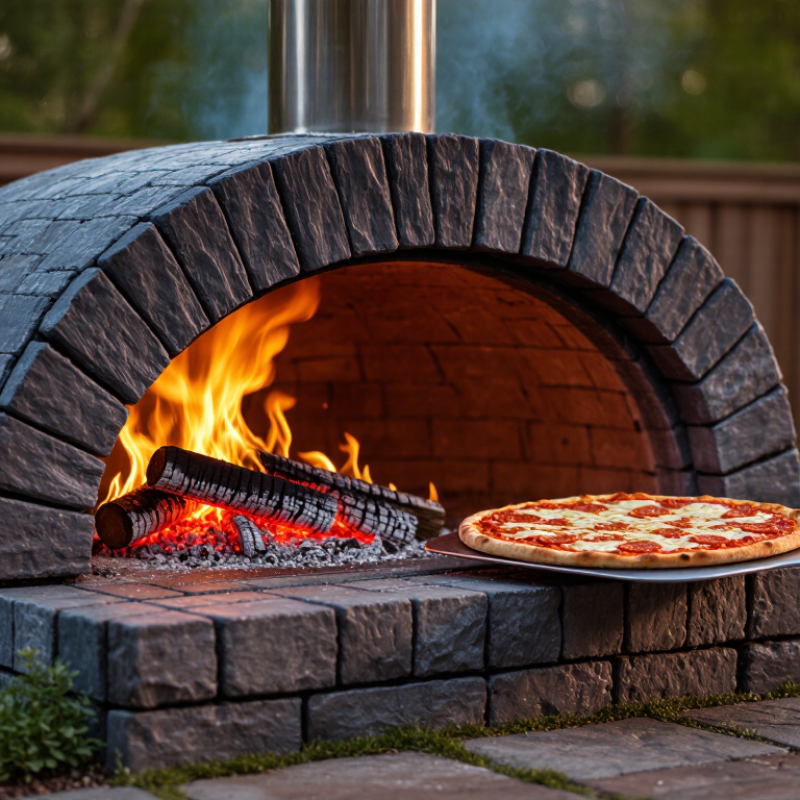
Table of Contents
[Hide]
What Is an Outdoor Pizza Fireplace?
An outdoor pizza fireplace is a purpose-built cooking structure installed outside a home. It combines a fire chamber, insulated walls, a cooking floor, and a chimney or vent. Unlike a standard grill, it stores heat inside masonry or heat-resistant panels. That retained heat cooks pizza through conduction, radiant heat, and hot air movement.
The fire usually burns seasoned wood or approved fuel. Flames heat the dome, while embers warm the cooking surface. A well-prepared chamber may reach 700°F, allowing a thin pizza to cook within two to five minutes. Actual results vary with insulation, fuel quality, weather, and the cook’s technique. My first assumption was that higher flames always mean better cooking. They do not. Excessive flames can scorch the crust before the center sets.
This appliance also reflects wider outdoor-cooking habits. The Hearth, Patio & Barbecue Association reported in its 2024 consumer research that 80% of U.S. households own a grill or smoker. However, pizza fireplaces require more planning than portable equipment. The National Fire Protection Association identifies cooking equipment as a leading cause of home fires in its fire-loss research. Therefore, the fireplace needs stable noncombustible flooring, safe clearances, controlled airflow, and regular chimney inspection. Smoke direction matters. A beautiful location can still be impractical when wind pushes smoke toward seating areas.
What Is an Outdoor Pizza Fireplace and How Does It Work?
| Data Dimension | Typical Information | How It Works or Why It Matters |
|---|---|---|
| Primary Function | Outdoor cooking appliance designed mainly for baking pizza | It combines high heat, a heated cooking surface, and an enclosed chamber to cook pizza efficiently. |
| Heat Sources | Wood, charcoal, gas, or electric heating elements | Fuel or heating elements generate the heat required to warm the oven chamber and cooking floor. |
| Main Structural Parts | Firebox or burner, cooking floor, dome or roof, door, insulation, and chimney or vent | Each component supports heat production, heat retention, airflow control, or safe exhaust. |
| Cooking Surface | Heat-resistant stone, ceramic, cast iron, or another thermal cooking material | The surface stores heat and transfers it directly to the underside of the pizza crust. |
| Heat Transfer Methods | Radiation, conduction, and convection | Radiant heat comes from the hot dome and fire, conduction comes from the cooking floor, and convection circulates hot air around the pizza. |
| Typical Operating Temperature | Approximately 315–480°C (600–900°F), depending on the design and fuel | Higher temperatures allow thin-crust pizzas to bake quickly, while lower temperatures suit thicker crusts and other dishes. |
| Preheating Requirement | Usually about 15–60 minutes | The required time depends on oven size, insulation, construction materials, ambient temperature, and fuel type. |
| Typical Pizza Cooking Time | About 1–5 minutes for a thin pizza at high heat | Cooking time varies with dough thickness, toppings, temperature, and how often the pizza is rotated. |
| Airflow and Ventilation | Controlled air intake and an exhaust path, often through a chimney or rear vent | Airflow supplies oxygen to the fire, carries smoke away, and helps maintain a stable cooking environment. |
| Fuel Characteristics | Wood and charcoal produce live flames and embers; gas and electricity provide more direct control | Fuel choice affects flavor, heat-up time, temperature adjustment, cleaning, and operating requirements. |
| Temperature Control | Managed through fuel quantity, airflow, burner settings, door position, and cooking-floor recovery | Adjusting these factors helps balance the heat of the floor with the heat reaching the top of the pizza. |
| Cooking Technique | Pizza is commonly placed near the heat source and rotated during baking | Rotation promotes even browning because the side closest to the flame or burner receives more radiant heat. |
| Other Suitable Foods | Flatbreads, vegetables, fish, meat, bread, and casseroles | Once the oven reaches a suitable temperature, its retained heat can be used for more than pizza. |
| Outdoor Installation | Requires a stable, heat-resistant, weather-appropriate location with adequate clearance | Correct placement reduces fire risk and protects surrounding surfaces, structures, and users. |
| Safety Considerations | Use heat-resistant tools, keep combustible materials away, and follow local fire and fuel regulations | Outdoor pizza fireplaces operate at very high temperatures and may produce flames, hot surfaces, smoke, or combustion gases. |
| Basic Maintenance | Remove ash and food residue, inspect vents, clean cooking surfaces, and check seals or connections | Regular maintenance supports airflow, cooking performance, durability, and safe operation. |
Related Posts
-
2026 Best Outdoor Fire and Pizza Oven Buying Guide
-
What Is a Backyard Pizza Oven Fireplace?
-
10 Best Backyard Pizza Oven Fireplaces for Perfect Outdoor Cooking?
-

Best Backyard Fireplace Pizza Oven for 2026 Trends?
-
Why You Should Consider an Outdoor Fire Place Pizza Oven for Your Backyard?
-
Why Choose a Backyard Pizza Oven Fireplace for Your Home?