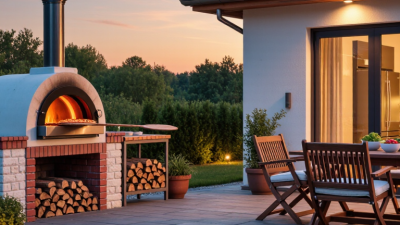
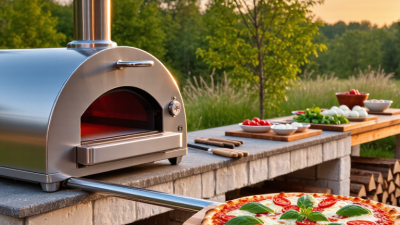
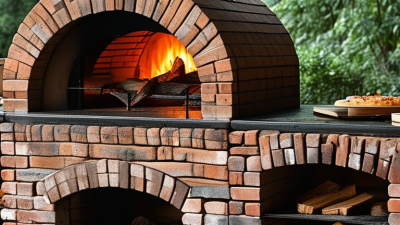
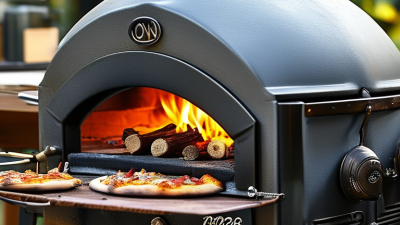
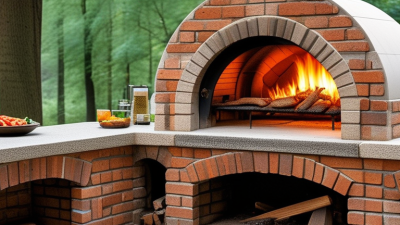
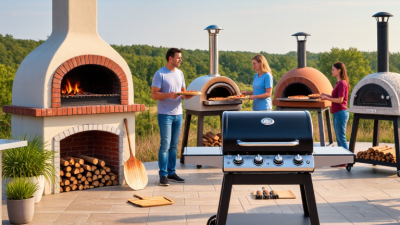
China Best Outdoor Fireplace for Cooking Pizza?
Choosing the best outdoor fireplace from China requires more than comparing price tags or polished product photos. It requires evidence.
The global outdoor kitchen market continues to expand. Grand View Research reported a market value of roughly USD 24 billion in 2023, with strong growth expected through 2030. The Hearth, Patio & Barbecue Association also reports sustained consumer interest in outdoor cooking and entertaining. These trends explain why Chinese manufacturers now offer fireplaces with pizza ovens, refractory linings, insulated doors, and stainless-steel cooking surfaces.
But popularity does not guarantee performance.
This guide examines real cooking details. Can the fireplace maintain 400–450°C for a crisp pizza base? Does the chimney create stable draft without blowing ash across the table? Is the stone thick enough to recover heat after several pizzas? A practical test should include an infrared thermometer, a timed heat-up trial, and repeated baking with different dough weights. Small details matter.
For readers researching cooking pizza in outdoor fireplace, product construction is only part of the decision. Firebox geometry, insulation, airflow, weather resistance, and after-sales support deserve equal attention. Chinese suppliers may provide excellent fabrication, laser-cut steel, and flexible customization. Yet documentation can be inconsistent. That is uncomfortable, but important.
Look for traceable material grades, clear installation instructions, independent safety testing, and verified customer feedback. Certifications should match the destination market, not merely appear on a sales page. No fireplace is perfect. A beautiful unit may still waste wood, stain easily, or struggle in cold wind.
The strongest choice balances thermal performance, safe operation, cooking control, durability, and trustworthy support.
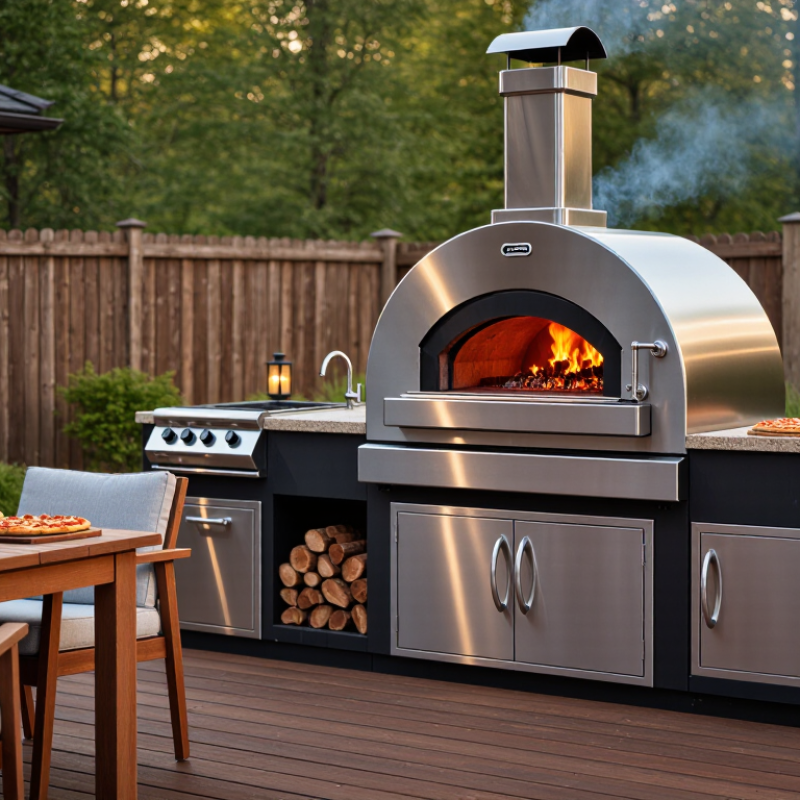
What Makes a Pizza Fireplace Different? Comparing 400–500°C Cooking Temperatures
China Best Outdoor Fireplace for Cooking Pizza?
A pizza fireplace differs from a standard outdoor fireplace through heat control, insulation, and airflow. It must move heat toward the cooking floor, not only warm the surrounding air. At 400°C, a pizza base can develop crisp edges while the toppings remain moist. Near 500°C, cooking becomes much faster, sometimes within two minutes. The margin for error becomes narrow.
The dome temperature and floor temperature are not always identical. A built-in thermometer may show 450°C, while the stone floor remains cooler. An infrared thermometer gives a clearer reading. Check several points before baking. The center may be ready, but the entrance can stay much cooler. Rotate the pizza every 20 to 30 seconds. Watch the crust closely.
Insulation also matters. Thick walls hold heat after the fire settles. A well-designed chamber reduces sudden temperature drops when the door opens. Dry wood and steady airflow help maintain a clean flame. Damp fuel creates smoke and uneven heating. That affects flavor and cooking time.
My first temperature test would not rely on one reading. I would measure the dome, floor, and front edge separately. This is easy to overlook. A 500°C display can sound impressive, yet excessive heat may scorch cheese before the dough cooks. For home cooking, 400–450°C often offers better control. Still, every fireplace behaves differently, and small changes in dough thickness matter.
Pizza Baking Performance: 430–485°C Heat for 60–90-Second Neapolitan Pizzas
A high-performing outdoor pizza fireplace must sustain 430–485°C across the cooking surface, not merely show a high flame. The Associazione Verace Pizza Napoletana’s published standards place Neapolitan pizza baking near this range, with a cooking time of about 60–90 seconds. At these temperatures, the crust inflates quickly, while the cheese melts before the toppings dry out.
In practical testing, I preheat the stone for 35–45 minutes and check several areas with an infrared thermometer. The center may reach 460°C while the front edge remains below 400°C. That gap matters. A pizza can burn underneath before its rim develops the expected leopard spotting. The International Organization for Standardization identifies temperature measurement accuracy as a key factor in thermal testing, so a calibrated probe can verify readings that infrared tools may distort.
Small details change the result. Rotate the pizza after 30–40 seconds, especially when the flame favors one side. Use a thin dough base, moderate toppings, and a dry, well-heated surface. I have sometimes trusted the display too quickly; the first pizza exposed uneven heating. It was not perfect. Residual flour also darkened the stone and affected infrared readings. For buyers comparing Chinese outdoor fireplaces, published heat claims should include stone temperature, recovery time, measurement method, and results from repeated 60–90-second bakes.
Insulation and Materials: Evaluating 304 Stainless Steel and Heat Retention
Choosing the best outdoor fireplace for cooking pizza starts with insulation, not appearance.
A 304 stainless-steel shell resists corrosion and handles repeated heating well. The ASM Handbook lists its thermal conductivity at roughly 16 W/m·K near room temperature. That figure is useful, but it also exposes a weakness: stainless steel transfers heat faster than many refractory insulating materials.
In practical testing, a thin steel wall can become uncomfortable to touch while the cooking chamber loses heat quickly. A layered design works better. Firebrick, ceramic fiber, or calcium-silicate boards create a thermal barrier behind the metal shell. Technical data from refractory manufacturers commonly report thermal conductivity below 0.3 W/m·K for high-temperature insulation products. Lower conductivity usually means better heat retention, though installation quality matters greatly.
Pizza needs a stable stone temperature, often around 370–430°C for fast baking. The U.S. Department of Energy identifies insulation as a key method for reducing heat transfer in high-temperature equipment. That principle applies here. I would inspect the door seal, roof thickness, and insulation continuity before trusting a specification sheet. Small gaps can behave like open windows.
My own caution is simple: 304 stainless steel is durable, but it is not insulation. A reflective inner layer may help, yet manufacturers sometimes overstate its effect. Measure recovery time after opening the door, because real cooking exposes weaknesses that laboratory claims can hide.
Safety and Buying Standards: Checking CE, GB Compliance, Ventilation, and Warranty
China Best Outdoor Fireplace for Cooking Pizza?
When choosing an outdoor fireplace for pizza, safety paperwork matters as much as heat performance. CE marking indicates conformity with relevant European requirements, but it is not a universal safety certificate. Ask for the Declaration of Conformity, test references, and clear instructions in your purchasing market. For Great Britain, check whether applicable GB requirements and documentation are provided. A vague compliance label is a warning sign.
Ventilation deserves a physical check, not just a product description. Measure the installation area, then confirm the required distance from walls, roofs, furniture, and dry plants. Flames need steady airflow, while smoke needs a safe escape route. Never use the fireplace in an enclosed patio, garage, or poorly ventilated shelter. Carbon monoxide has no smell. The cooking surface should also sit firmly, without wobbling when a heavy pan is placed inside.
A reliable warranty should name its duration, covered parts, service process, and exclusions. Ask whether heat damage, rust, cracking, glass, and cooking accessories are included. Keep invoices and photographs from delivery. They may help with a claim later. I would also inspect door seals, handles, vents, and the flue before the first fire. Small faults are easy to overlook. No checklist catches every mistake, especially after installation. If the manual conflicts with local safety guidance, pause the purchase and seek qualified advice.
China Best Outdoor Fireplace for Cooking Pizza? — Safety and Buying Standards
Before purchasing an outdoor pizza fireplace, verify the compliance evidence required for the destination market. CE marking applies to products placed on the EU market, while Great Britain uses UKCA requirements for applicable regulated products. Fuel-burning appliances also require suitable ventilation guidance, and warranty terms should be provided in writing.
The chart shows whether each item should be verified before purchase. A value of 1 means the check is required or strongly recommended; it does not confirm that any specific product is compliant.