2026 Best Outdoor Fire Oven for Global Buyers?
Choosing the 2026 best outdoor fire oven requires more than comparing heat ratings and attractive photographs. Global buyers face different climates, cooking habits, fuel rules, and installation conditions. A compact oven may suit a balcony in London, but fail in a humid coastal kitchen. A large masonry model may perform beautifully, yet demand permanent space, professional installation, and regular maintenance.
Kristian Tapaninaho, founder of Ooni, once described his purpose simply: “I wanted to make great pizza at home.” That idea still guides this review. An effective outdoor fire oven should heat evenly, recover temperature quickly, and remain manageable for ordinary users. Its stone floor should create a crisp base without scorching the crust. Its insulation should protect nearby surfaces. Small details matter, including door fit, chimney control, thermometer accuracy, and ash removal.
This guide compares leading models for pizza, bread, roasting, and slow cooking. It considers wood, charcoal, gas, and hybrid systems, while recognizing that no single fuel works everywhere. We examine build quality, usable cooking area, portability, weather resistance, cleaning demands, warranty support, and safety documentation. Regional certification also deserves attention before purchase. Check local requirements.
Some performance claims look impressive but lack realistic testing. We will question them. A few rankings may remain debatable, especially when price and availability change by country. Still, the goal is practical: help buyers select an outdoor fire oven that fits their space, skill level, budget, and cooking expectations. The best choice is not always the hottest model. It is the oven you can operate safely, maintain consistently, and enjoy for years.
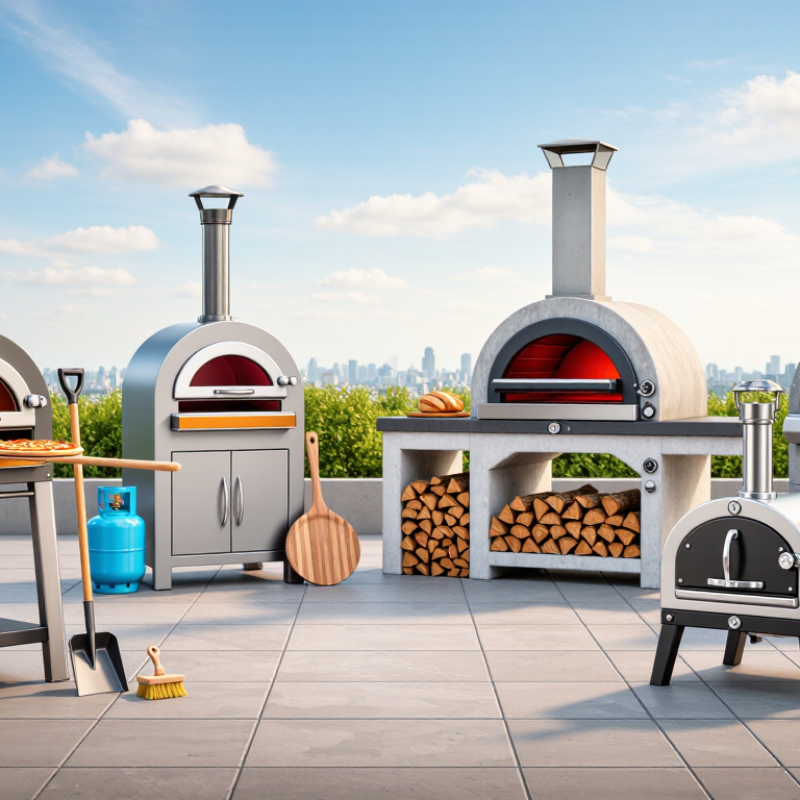
Table of Contents
[Hide]
What Is an Outdoor Fire Oven and How Does It Work?
2026 Best Outdoor Fire Oven for Global Buyers?
What Is an Outdoor Fire Oven and How Does It Work?
An outdoor fire oven is a high-temperature cooking chamber designed for patios, gardens, or commercial outdoor spaces. It usually uses wood, gas, or another approved fuel source. Unlike a standard grill, it stores heat inside its dome, walls, and cooking floor. It is not a grill. Heat moves three ways.
The flame creates radiant heat across the food surface. Hot air circulates through the chamber by convection. The heated stone or ceramic floor transfers direct heat into dough, vegetables, and meat. A thick cooking floor can produce a crisp base, while the dome helps brown the top quickly. Proper airflow matters because oxygen supports the fire and carries smoke toward the chimney or vent.
In practical use, I usually preheat the oven well before cooking. The visible flame may look strong, but the floor can remain too cool. An infrared thermometer gives a more reliable reading than appearance alone. Cooking also requires frequent turning because one side may sit closer to the flame. My first flatbreads often burned at the edge while staying soft underneath. That mistake showed me the importance of smaller fires and patient heat balancing.
Buyers should check fuel availability, ventilation, insulation, weather resistance, and local installation rules. A well-insulated oven uses less fuel, but it may take longer to cool. Heat remains dangerous for hours. Children and pets need a clear distance from the opening.
2026 Best Outdoor Fire Oven for Global Buyers? - What Is an Outdoor Fire Oven and How Does It Work?
| Data Dimension | Wood-Fired Dome Oven | Gas-Fired Outdoor Oven | Dual-Fuel Outdoor Oven | Key Buying Consideration |
|---|---|---|---|---|
| What It Is | An insulated oven that uses burning wood to generate heat for baking, roasting, and grilling. | An oven heated by a gas burner, normally using liquefied petroleum gas or natural gas where supported. | An oven designed to operate with either wood or gas, allowing users to switch between fuel sources. | Choose the oven type according to local fuel availability, cooking preferences, and operating convenience. |
| How It Works | Wood burns inside the chamber. Heat is stored in the oven floor and dome, while flames and hot gases circulate across the cooking area. | A burner heats the oven floor and dome. Convection and radiant heat cook food after the chamber reaches the selected temperature. | Wood provides flame and smoke flavor; the gas burner provides faster ignition and more consistent temperature control. | All types rely on radiant heat, hot air circulation, and heat conduction through the cooking surface. |
| Typical Maximum Temperature | Approximately 400–500°C (750–930°F), depending on insulation, fuel, airflow, and operating technique. | Approximately 350–500°C (660–930°F), depending on burner output and chamber insulation. | Approximately 350–500°C (660–930°F), with the actual limit determined by the oven design and fuel mode. | Verify the manufacturer’s temperature rating and use a suitable high-temperature thermometer. |
| Typical Pizza Cooking Time | About 60–120 seconds for a thin pizza when the oven floor and dome are fully heated. | About 60–180 seconds after sufficient preheating, depending on dough thickness and heat distribution. | About 60–180 seconds when operated at high temperature with a properly heated cooking surface. | Fast cooking requires a hot floor, strong top heat, correct dough hydration, and regular turning. |
| Typical Preheating Time | Approximately 30–90 minutes, depending on oven mass, insulation, weather, and target temperature. | Approximately 15–35 minutes for many compact models, subject to burner power and insulation. | Approximately 15–90 minutes, depending on whether gas or wood is used and how much thermal mass the oven has. | Shorter preheating generally improves convenience but may provide less stored heat for batch cooking. |
| Heat Characteristics | High radiant heat with strong thermal storage and optional wood-smoke flavor. | Fast, controllable heat with little or no smoke flavor. | Combines controllable heat with the option of wood-fired flavor. | Insulation quality, dome thickness, and cooking-floor material affect heat stability. |
| Fuel Requirement | Dry, untreated hardwood or other fuel specifically approved for the oven. | A compatible gas supply, regulator, hose, and connection approved for the destination market. | Approved dry wood plus a compatible gas setup, with separate safety requirements for each fuel. | Fuel type, connector standards, and gas pressure vary by country and should be checked before purchase. |
| Cooking Applications | Pizza, flatbread, bread, vegetables, roasted meat, seafood, and slow-cooked dishes after the temperature falls. | Pizza, flatbread, vegetables, grilled meat, seafood, and other high-temperature foods. | Suitable for pizza, baking, roasting, grilling, and mixed cooking styles. | A larger chamber is more useful for bread and roasting, while a compact chamber heats faster. |
| Temperature Control | Controlled by wood quantity, fuel placement, airflow, chimney damper where fitted, and door position. | Controlled mainly by burner adjustment, airflow, and door position. | Controlled by either burner adjustment or wood management, depending on the selected mode. | Gas is generally easier for repeatable temperature control; wood requires more operating skill. |
| Smoke and Ventilation | Produces smoke during combustion and requires safe outdoor placement with adequate airflow and flue clearance. | Normally produces much less visible smoke but still requires outdoor ventilation and correct combustion. | Ventilation requirements depend on the selected fuel and the oven’s flue and burner design. | Never use a fuel-burning outdoor oven in an enclosed room, garage, tent, or poorly ventilated space. |
| Typical Weight Range | Approximately 30–150 kg for portable and freestanding residential units. | Approximately 10–80 kg for compact and freestanding residential units. | Approximately 20–100 kg, depending on materials, insulation, and fuel-system components. | Check product weight, stand construction, casters, packaging weight, and delivery access. |
| Typical Cooking Surface | Approximately 40–100 cm in diameter or equivalent rectangular area. | Approximately 30–90 cm in width, depending on the chamber configuration. | Approximately 35–90 cm in width, depending on oven size and internal layout. | Allow additional clearance around food for turning, airflow, and safe handling. |
| Best Use Scenario | Best for traditional cooking, smoke flavor, high thermal retention, and users who enjoy managing a live fire. | Best for quick startup, regular weeknight cooking, and users who prefer simpler heat adjustment. | Best for households or commercial users who want both convenience and wood-fired cooking flexibility. | The “best” choice depends on cooking style, fuel access, climate, space, and local regulations. |
| Weather and Climate Factors | Cold, wind, and moisture can increase heat-up time and fuel consumption. | Wind can affect burner stability and performance; cold conditions can lengthen preheating. | Performance may vary significantly between wood and gas operation in cold or windy conditions. | Look for weather-resistant construction, a protective cover, stable feet, and adequate insulation. |
| Maintenance Requirements | Remove ash after cooling, brush the cooking floor, inspect the flue, and keep the chamber dry. | Clean food residue, inspect the burner and gas hose, and check connections for wear or leakage. | Perform both wood-fired cleaning and gas-system inspection according to the operating instructions. | Maintenance intervals depend on usage frequency, fuel quality, weather exposure, and oven materials. |
| Core Safety Requirements | Use dry approved fuel, heat-resistant tools, fire-safe clearance, and a suitable extinguisher nearby. | Use the correct regulator and hose, check for leaks, keep the cylinder upright, and follow ignition procedures. | Follow separate safety procedures for wood and gas; never change fuel mode while the oven is unsafe or overheated. | Keep children and combustible materials away from the oven and allow all surfaces to cool before storage. |
| Global Buyer Checklist | Confirm shipping dimensions, import duties, fuel restrictions, local fire rules, and required chimney clearances. | Confirm gas type, pressure, connector standard, hose certification, and compatibility with local regulations. | Confirm both gas and wood requirements, spare parts availability, and installation instructions for the destination country. | Prioritize safety certification, clear manuals, replacement parts, warranty terms, and local technical support. |
The specifications shown are typical ranges for residential outdoor fire ovens and can vary according to oven size, materials, insulation, fuel system, climate, and local safety requirements. Always follow the product instructions and destination-country regulations.
Related Posts
-
China Best Outdoor Fireplace for Cooking Pizza?
-
7 Best Outdoor Brick Fireplace With Pizza Oven Kits
-
How to Choose an Outdoor Fireplace Pizza Oven in 2026?
-
How to Choose an Outdoor Brick Fireplace with Pizza Oven
-
7 Tips for Choosing an Outdoor Fireplace Pizza Oven?
-
7 Tips for Buying an Outdoor Pizza Fireplace