
Is YH Umbrella a Top China Umbrella Manufacturer?
The global umbrella industry is growing, but market estimates vary by research method. Grand View Research identifies product design, weather protection, and retail expansion as key growth factors. Mordor Intelligence also highlights rising demand for compact, automatic, and promotional umbrellas. These reports show opportunity, but they do not automatically prove any supplier’s quality.
YH Umbrella deserves evaluation through measurable manufacturing evidence. A serious China umbrella manufacturer should demonstrate stable factory capacity, documented quality controls, and reliable export experience. Look for clear information about frame materials, canopy fabric, wind testing, stitching strength, and handle durability. A sample should open smoothly, close without resistance, and remain balanced when held. Small details matter.
Certification records matter too. Buyers should verify ISO 9001 claims, product test reports, factory audits, and shipment consistency. Public company profiles can be useful, although they may not reveal current production conditions. YH Umbrella should therefore be assessed through recent samples, inspection records, customer references, and transparent communication. That approach follows E-E-A-T principles: practical experience, technical knowledge, credible evidence, and reliability.
There is no perfect supplier.
A top manufacturer is not defined by attractive photos alone. It must repeat quality across large orders, manage seasonal demand, and respond responsibly when defects appear. YH Umbrella may be a strong candidate, but a fair conclusion requires independent verification. Industry reports provide context. Factory evidence provides confidence.
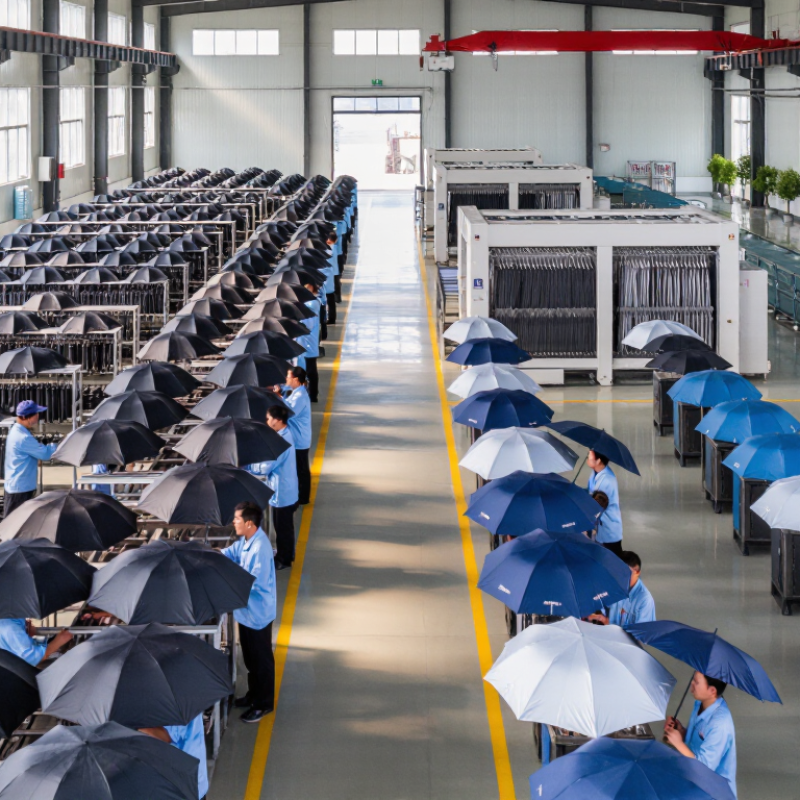
A Chinese umbrella manufacturer should be judged by its background, not only by production volume. Public company information should show when the factory began, where it operates, and which umbrella categories it produces. A useful profile includes folding, straight, golf, children’s, and promotional umbrellas. It should also explain material choices, such as polyester fabric, fiberglass ribs, and corrosion-resistant shafts. Details matter here. A wet sample, visible stitching, and a tested opening mechanism often reveal more than polished photographs.
The global umbrella market continues to expand. Fortune Business Insights valued it at about USD 7.3 billion in 2023 and projected continued growth through 2032. This trend creates opportunities for Chinese manufacturers with stable export systems and flexible customization. However, market growth does not prove that one factory is a top supplier. Buyers should examine production capacity, inspection records, sample consistency, and communication speed. Certifications can support credibility, but they do not replace independent quality checks.
A stronger company overview should also describe the manufacturer’s experience with weather testing and packaging control. Can it prevent frame damage during ocean transport? Can it reproduce the same canopy color across repeated orders?
These practical questions deserve clear answers. Some factory profiles remain too general. That is a weakness. Reliable evaluation requires recent samples, traceable inspection documents, and direct evidence from long-term customers. A manufacturer may offer competitive pricing, yet still need improvement in delivery forecasting or product documentation. That honest gap should be considered before calling any supplier a leading producer.

When evaluating a China-based umbrella manufacturer, product range reveals more than catalog size. A capable supplier should offer compact travel umbrellas, straight umbrellas, golf models, children’s styles, and weather-resistant promotional designs. Each category requires different engineering choices.
Compact frames need flexible ribs and controlled folding. Golf umbrellas need wider canopies, reinforced shafts, and balanced handles. Rain performance depends on fabric density, seam treatment, and canopy tension.
I have found that material descriptions alone are not enough. Buyers should request samples and inspect opening force, rib alignment, handle bonding, and stitching. Small defects often appear after repeated use.
Manufacturing capability also includes production planning, customization, and quality control. A reliable factory should explain its cutting, printing, assembly, and inspection steps clearly.
It should provide measurable details, such as canopy diameter, frame material, fabric weight, packing method, and sample lead time. In-house printing can improve control, while documented subcontracting requires closer supervision.
Batch inspections should check color consistency, wind resistance, automatic mechanisms, and carton strength.
Production capacity matters, but steady quality matters more. A large monthly figure can sound impressive. It may not reflect peak-season delays or rework. That is worth questioning.
A manufacturer may handle standard umbrellas well but need improvement with complex mechanisms or recycled fabrics. Honest limitations are useful. They help buyers choose suitable projects.
A top Chinese umbrella manufacturer should prove quality through repeatable standards, not attractive samples alone.
During factory inspections, I look for incoming material checks, production records, and final inspections. These records show whether quality is controlled or simply promised. Canopy fabric should resist tearing, fading, and light rain. Polyester is common, while recycled polyester can support sustainability goals when its source is documented. Fiberglass ribs offer flexibility, but metal frames may provide stronger wind resistance.
Tips: Ask for fabric weight, colorfastness, and water-repellent test results. Check whether tests cover both open and closed umbrellas. Inspect several units from different cartons. One perfect sample proves little.
Production details also reveal technical maturity.
Cutting machines should maintain consistent panel sizes, while stitching lines need even tension and secure thread ends. Handle attachment, runner movement, and automatic opening systems require repeated functional checks. Packaging should protect curved ribs from pressure during shipping.
In my experience, small defects often appear around seams and button springs. They are easy to miss. A reliable manufacturer should record these failures, correct the cause, and verify the next batch.
Still, no production system is flawless. Weather simulation may not match every real storm, and supplier changes can quietly affect performance. Independent inspections remain useful, especially for large orders and custom designs.
A Chinese umbrella manufacturer’s market position depends on more than factory size or export volume. It should be judged by frame consistency, fabric quality, delivery control, and response speed. In practical sourcing, buyers often inspect rib joints, shaft alignment, canopy stitching, and opening force. These details reveal more than polished brochures.
Compared with many Chinese competitors, a mid-to-large supplier may offer stronger customization and stable bulk production. Smaller workshops can sometimes provide lower prices or faster samples. However, quality may vary between batches. A capable manufacturer should explain material choices, sampling procedures, inspection points, and corrective actions clearly. Buyers should verify these claims through factory audits, production samples, and shipment records. A supplier with strong experience may still have weak design development. That possibility deserves attention.
Tips: Request three samples from different production batches. Check the same umbrella after repeated opening and closing. Ask for fabric specifications, inspection standards, and realistic lead times. Do not compare prices alone. Some evaluations will remain incomplete without an on-site visit.
Company-free procurement priorities for evaluating umbrella manufacturers in China
The chart uses a transparent 100-point sourcing framework based on practical buyer requirements: product quality, manufacturing capacity, customization, export compliance, delivery reliability, and sustainability documentation. These are evaluation weights rather than market-share claims, so individual companies are not ranked or identified.
Evaluating a China-based umbrella manufacturer requires more than a polished website or low quotation. Look for evidence of repeatable production, including factory photographs, material specifications, sample records, and quality-control steps. Ask which fabrics, ribs, shafts, and coatings are used. A reliable supplier should explain polyester and pongee differences clearly. It should also discuss manual systems, automatic opening, and wind-resistant frame designs. Request a physical sample. Check its stitching, canopy tension, handle grip, and closing action during normal use.
Tips: Compare at least three samples from different production batches. Confirm minimum order quantities, packaging details, inspection timing, and realistic lead times in writing. Ask for test reports when water resistance or wind performance matters. Do not treat every certificate as proof of quality. Verify its issuer, date, and scope. Contact recent buyers if possible. Vague answers about defects or replacement policies can signal future delays.
Professional evaluation also includes communication. Can the team report a color mismatch quickly? Can it correct a bent rib without blaming transport? These moments reveal more than sales language. Pricing deserves a second look. An unusually low quote may exclude stronger frames, protective packaging, or final inspection. I would record every promise and test result because memory becomes unreliable during a busy order. The assessment may remain imperfect when factory access is limited. Transparent evidence still makes the purchasing decision more defensible.
| Evaluation Dimension | Measurable Indicators | Reliable Evidence to Request | Relevant Standard or Reference | Evaluation Status |
|---|---|---|---|---|
| Manufacturing Capability | Production-site location, owned or controlled facilities, production lines, equipment list, and monthly output by product category. | Factory profile, dated facility photographs, production-flow diagram, equipment register, and an on-site or live video audit. | Capacity should be verified against the buyer’s required order volume, lead time, and seasonal demand. | Verify with factory evidence |
| Quality Management | Documented inspection procedures covering incoming materials, in-process assembly, final inspection, packaging, and nonconforming products. | Quality manual, inspection checklists, corrective-action records, calibration records, and recent quality-performance reports. | ISO 9001:2015 provides a recognized framework for quality-management systems. | Check certificate and scope |
| Product Durability | Frame strength, rib fatigue, opening and closing cycles, handle attachment, canopy stitching, corrosion resistance, and wind-performance results. | Product specifications, internal test methods, test conditions, sample quantities, failure criteria, and independent laboratory reports where available. | Testing should use a documented method with traceable samples; there is no single universal global wind-resistance rating for all umbrellas. | Compare test methodology |
| Material Control | Traceability and specifications for polyester or other canopy fabric, steel or fiberglass ribs, shafts, plastic components, coatings, and packaging. | Material specifications, supplier declarations, batch records, incoming inspection results, and material-change approval procedures. | Material claims should be supported by batch-level documentation rather than general marketing statements. | Review traceability depth |
| Chemical and Regulatory Compliance | Control of restricted substances in fabrics, coatings, inks, plastics, adhesives, and metal components for the destination market. | Recent third-party test reports, supplier declarations, restricted-substance policy, and a documented compliance process for each destination country. | EU REACH requirements may apply to articles and substances placed on the EU market. OEKO-TEX® Standard 100 applies to tested textile components when certification is obtained. | Confirm market-specific compliance |
| Order Consistency | On-time delivery rate, defect rate, claim rate, sample-to-bulk consistency, and performance across repeat orders. | Redacted quality dashboards, shipment records, inspection reports, customer-claim logs, and approved golden-sample procedures. | A credible evaluation should use performance data from multiple completed orders, not only a single sample. | Request historical records |
| Customization and Development | Ability to develop new canopy patterns, handle shapes, logo applications, packaging, automatic mechanisms, and private-label specifications. | Development timeline, sample approval process, tooling ownership terms, artwork controls, prototype records, and change-management procedure. | Capability should be assessed by completed development projects and documented approval stages. | Evaluate with a pilot project |
| Social Responsibility | Working-hour controls, wage records, worker health and safety, emergency preparedness, grievance channels, and subcontractor management. | Recent social-audit report, corrective-action plan, occupational-safety records, and policy covering unauthorized subcontracting. | SMETA is an audit methodology; it is not the same as a product or management-system certification. | Request independent audit evidence |
| Environmental Management | Energy and water monitoring, waste handling, chemical storage, packaging reduction, recycled-material claims, and emissions management. | Environmental policy, utility records, waste-transfer documents, packaging specifications, and certification records where applicable. | ISO 14001:2015 provides a recognized framework for environmental-management systems. | Check certification scope |
| Supply-Chain Transparency | Disclosure of key raw-material suppliers, subcontracting locations, production stages, and traceability from material batch to finished goods. | Approved-supplier list, purchase records, subcontractor register, batch-coding system, and supply-chain audit results. | Transparency is stronger when records connect raw-material lots with finished-product inspection and shipment documents. | Verify independently |
| Commercial Reliability | Minimum order quantity, sample charges, tooling costs, payment terms, lead time, warranty terms, spare-parts policy, and after-sales response time. | Formal quotation, sales contract, service-level commitments, warranty policy, and written procedures for product claims. | All commercial commitments should be stated in writing and linked to measurable acceptance criteria. | Compare contractual terms |
| Independent Verification | Consistency between declared factory information, certificates, test reports, production location, and actual shipped goods. | Factory audit, production inspection, pre-shipment inspection, laboratory testing, certificate verification, and reference checks. | Independent verification reduces the risk of relying solely on self-declared manufacturer information. | Recommended before approval |
| Assessment principle: A manufacturer should be considered “top-tier” only after its capacity, quality system, product performance, compliance records, delivery history, and commercial commitments have been verified with current, traceable evidence. Certification names alone do not prove overall manufacturing capability. | ||||