
Dinosaur Fossils attract global buyers because they connect scientific evidence with a powerful sense of discovery. A well-preserved specimen can reveal bone structure, growth patterns, diet, movement, and ancient ecosystems. Its value may rise when preparation is skilled, documentation is complete, and its history is transparent. Museums may seek fossils for public education. Universities may study them through careful research. Responsible collectors may value their craftsmanship and educational potential.
Paleontologist Dr. Steve Brusatte has said, “Dinosaurs are a gateway to science.” That simple sentence explains much of their worldwide appeal. A fossil on display can turn a school visit into a lasting scientific interest. Scratches on a fossil’s surface may show preparation methods. Fine mineral details can preserve a vanished environment. These physical clues make Dinosaur Fossils more than decorative objects.
However, market price does not always equal scientific importance. A small fragment with strong provenance may matter more than a spectacular specimen with uncertain records. Buyers must examine export permissions, ownership history, preparation reports, and independent expert opinions. Laws differ between countries, and ethical purchasing requires respect for local heritage and scientific standards. Some listings appear impressive but provide weak evidence. That is where careful judgment becomes essential.
This article explores why Dinosaur Fossils command attention across international markets. It considers rarity, preservation, research value, cultural influence, and buyer confidence. It also questions a common assumption: expensive does not automatically mean important. The strongest value combines legitimate origin, reliable scholarship, and responsible stewardship.
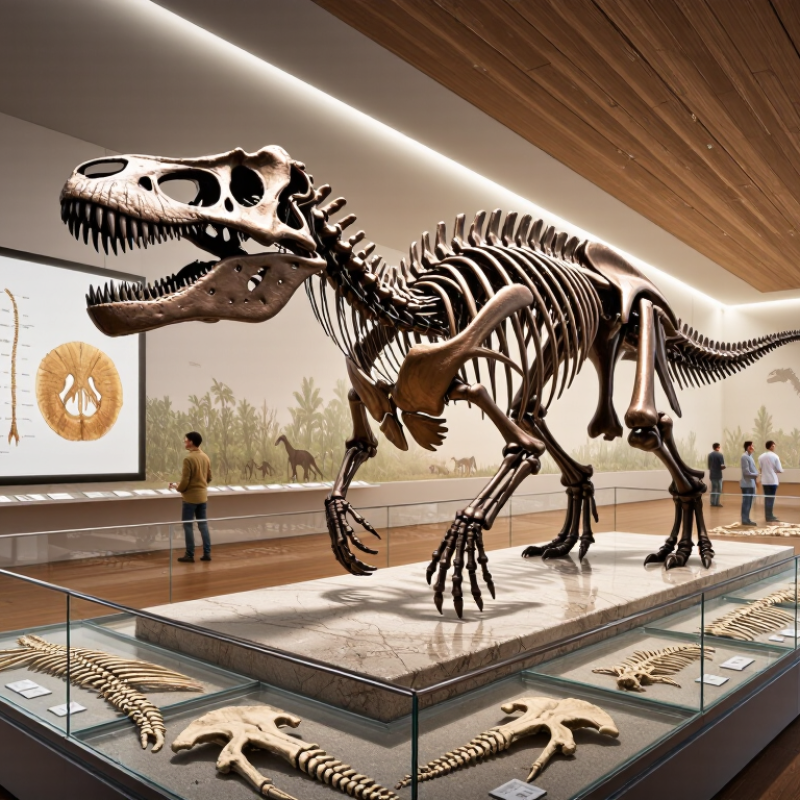
Dinosaur fossils attract global buyers because rarity and scientific value often overlap. A complete skeleton is uncommon, but even one bone can hold important evidence. Its surface may preserve growth marks, disease traces, or signs of injury. Nearby sediment can also reveal an ancient environment. These details make fossils more than decorative objects. They become physical records of vanished ecosystems.
Scientific importance depends on context. A fossil with a documented location, excavation history, and expert preparation is usually more informative. Legal permits and clear ownership records matter just as much. Poorly documented specimens may look impressive, yet lose much of their research value. Preparation can also hide damage or alter fragile surfaces. I have seen how a small crack changes an assessment. Some judgments remain uncertain, and honest uncertainty is better than confident guessing.
Tips: Ask for independent identification and complete provenance records. Check whether export and ownership laws were followed. Look for visible repairs, reconstructed sections, and replaced material. A museum or qualified paleontologist can review unusual specimens. Do not judge value from size alone. The smallest fragment may preserve the strongest clue.
Why Are Dinosaur Fossils So Valuable to Global Buyers?
Dinosaur fossils gain value through a rare combination of formation, survival, and scientific importance. Fossilization begins when sediment quickly covers bones, limiting oxygen and decay. Mineral-rich groundwater may then replace the original bone structure over millions of years. This process can preserve fine textures, hollow spaces, and even delicate vertebrae.
Preservation quality strongly affects buyer interest. A nearly complete skeleton usually attracts more attention than scattered fragments. Clear anatomical connections can also improve its research value. However, restoration must remain transparent. Excessive repair may create an attractive display, but it can reduce scientific reliability. No valuation is perfectly objective. Experienced paleontologists examine matrix, preparation methods, surface details, and documented ownership history. They also compare the specimen with established scientific records.
Tips: Ask for detailed photographs, condition reports, and preparation notes. Verify whether the fossil has lawful export and ownership documentation. Seek an independent specialist before making a purchase. Small cracks matter. Hidden repairs matter more. A specimen with strong documentation may hold greater long-term value than a larger, poorly recorded example. Global buyers should also check local regulations, because fossil laws differ widely between countries. Mistakes happen, even during expert examination. That is why careful review, conservative claims, and scientific transparency remain essential.
Why Are Dinosaur Fossils So Valuable to Global Buyers?
Global buyers seek dinosaur fossils mainly for research and public education. Museums need specimens that reveal anatomy, growth, disease, and ancient ecosystems. The Paleobiology Database records more than 1.5 million fossil occurrences worldwide, showing how essential comparative evidence has become. A single well-documented skeleton can support years of study. The specimen matters.
Display value also depends on clarity. UNESCO has estimated that museums receive more than one billion visitors annually, creating strong demand for accurate natural-history exhibits. A mounted dinosaur can attract families, students, and researchers. However, display quality should never replace scientific context. Labels, excavation records, locality data, and preparation notes make a fossil more useful. Context is everything.
Experienced institutional buyers examine provenance, export permissions, ownership history, and conservation records before purchase. International museum ethics guidance consistently stresses lawful, documented acquisition. Missing paperwork can reduce research value, even when the fossil looks spectacular. Some sellers focus too heavily on size and visual drama. That approach is understandable, but incomplete. A smaller specimen with clear stratigraphy may teach more than a larger, poorly recorded one. Market prices are therefore influenced by rarity, condition, preparation quality, and verifiable scientific information. These standards are not perfect, and data quality varies between regions. Buyers still have a responsibility to ask difficult questions.
Publicly reported prices for selected dinosaur fossils show why rare, scientifically important specimens attract international interest for research, education, and display.
Selected public auction results, nominal USD millions. Prices are historical sale values and are not a measure of scientific quality alone.
A dinosaur fossil’s price often begins with provenance, not appearance. Provenance records where the specimen was found, collected, studied, and transferred. A labeled field photograph can matter as much as a polished display surface. So can excavation notes, permits, ownership records, and customs documents. These details form a chain of custody that buyers can examine.
Legality shapes value in practical ways. Responsible sellers should explain the fossil’s origin and provide documentation required by relevant authorities. Different countries may apply different rules to excavation, export, import, and private ownership. A specimen without clear records can face delays, rejection, or serious disputes. Legal uncertainty reduces confidence, even when the fossil looks exceptional.
Authenticity requires more than a convincing shape. Specialists may inspect bone texture, mineral replacement, preparation marks, and possible restoration. Imaging and comparative research can reveal inconsistencies hidden beneath a smooth surface. A small restored section is not automatically deceptive, but it must be disclosed clearly. Otherwise, the price may reflect an illusion.
Some buyers focus too heavily on size and visual drama. That is understandable, but incomplete. A modest specimen with strong documentation may deserve more trust than a larger, undocumented one. Scientific importance, rarity, condition, and ethical collection history also influence value. No certificate removes every doubt. Even careful experts can revise an opinion when new evidence appears.
Dinosaur fossils attract global buyers because they preserve rare evidence of ancient life. Yet financial value should never override responsibility. International trade begins with clear provenance. Buyers should request excavation records, ownership history, export permits, and customs documents. A polished display cannot replace paperwork.
Ethical practice also depends on national heritage rules. Some countries protect fossils as public heritage, while others permit carefully regulated private ownership. Professional dealers and collectors must check the source country’s requirements before purchase. Independent paleontologists can examine preparation quality and confirm that scientific details remain intact. Specimens should not be altered to appear rarer. This is where judgment becomes difficult. A legal sale may still weaken research when the fossil’s original context has been lost.
Responsible trade includes transparent pricing, written contracts, and secure transport. It should also support museum access, research, and repatriation when authorities identify a stronger public claim. Records should travel with the fossil, not remain in one seller’s memory. The global system is improving, but it is not perfect. Unclear rules and uneven enforcement still create confusion. For buyers, patience is practical ethics. A missing record can stop a shipment and damage trust.
| Dimension | Verified Data or Rule | Why It Affects Value or Trade Risk | Responsible Buyer Expectation |
|---|---|---|---|
| Geological age | Most dinosaur fossils come from the Mesozoic Era, approximately 252 to 66 million years ago. Non-avian dinosaurs lived from roughly 235 to 66 million years ago. | Extreme age, rarity, and the limited number of well-preserved specimens increase scientific, educational, and collector interest. | Request a documented geological context and avoid specimens with a missing or suspicious excavation history. |
| Scientific importance | A fossil can preserve information about anatomy, evolution, behavior, paleoecology, and the geological environment in which it was found. | Specimens with clear scientific value may be more important to research and public education than to private ownership. | Consider whether qualified researchers and public institutions have had appropriate access to study the specimen. |
| Completeness and preservation | Rarity, anatomical completeness, preparation quality, authenticity, and the amount of original fossil material are commonly used valuation factors. | More complete and better-preserved specimens generally attract greater interest, while repairs, reconstruction, or composite elements can materially affect value. | Require an independent condition report that identifies restoration, replacement material, reconstruction, and replicas. |
| Provenance | Provenance is the documented ownership, excavation, publication, exhibition, and movement history of a specimen. | A continuous provenance record reduces the risk that the fossil was excavated or exported unlawfully. | Obtain excavation records, prior ownership documents, permits, invoices, publication references, and transport records where available. |
| National ownership laws | Many countries treat fossils found on public land or in protected areas as state property, cultural heritage, or protected geological material. Rules vary by jurisdiction. | A fossil may be legally excavated in one country but illegal to export, sell, or import under another country’s law. | Verify the law of the country of origin, the export country, the transit countries, and the destination country before purchase or shipment. |
| UNESCO 1970 Convention | The 1970 UNESCO Convention addresses the illicit import, export, and transfer of ownership of cultural property. Its application to fossils depends on national implementation and classification. | Fossils classified as protected cultural or natural heritage may be subject to return claims, import restrictions, or customs scrutiny. | Check whether the origin and destination countries are parties to the Convention and whether relevant domestic implementing rules apply. |
| UNIDROIT 1995 Convention | The 1995 UNIDROIT Convention provides rules concerning stolen or illegally exported cultural objects, including possible restitution or return procedures where applicable. | Later discovery of unlawful removal can create ownership disputes, restitution obligations, and significant financial loss. | Use enhanced due diligence for high-value specimens and retain evidence showing reasonable investigation of title and export legality. |
| CITES relevance | CITES primarily regulates international trade in living species and listed specimens. Fossils are generally outside its scope because they are not living biological specimens, but national rules may impose additional controls. | Buyers should not assume that the absence of a CITES requirement means that a fossil is legal to export or import. | Confirm the requirements of customs, heritage, mining, protected-area, and wildlife authorities in every relevant jurisdiction. |
| Excavation ethics | Responsible excavation records the exact locality, stratigraphic layer, associated material, and collection circumstances. Removing a fossil without recording its context can destroy scientific information. | Loss of geological context can reduce research value even when the fossil itself is visually attractive. | Prefer specimens excavated with documented scientific methods and reject material linked to protected sites, looting, or clandestine digging. |
| Authenticity and restoration | Commercial specimens may contain repairs, casts, painted fills, reconstructed sections, or composite parts from more than one individual. | Misrepresentation can inflate prices and undermine scientific integrity. | Obtain written disclosure, high-resolution photographs, preparation notes, and an independent specialist examination before purchase. |
| Customs and export documentation | International shipments may require export permits, import permits, cultural-property certificates, declarations of origin, invoices, and accurate commodity descriptions. | Incomplete or inaccurate paperwork can lead to seizure, delays, penalties, or refusal of entry. | Use accurate descriptions and declared values, preserve all permits, and ensure the shipping route matches the authorized documentation. |
| Black-market risk | Unprovenanced fossils can originate from unauthorized excavation, protected areas, conflict zones, or trafficking networks. | Low-price offers, urgent sales, anonymous ownership histories, and unusually rare specimens may signal elevated legal and ethical risk. | Apply enhanced due diligence, document the decision-making process, and walk away when provenance cannot be reasonably verified. |
| Public and scientific access | Fossils can provide long-term public benefit through research, conservation, education, and museum display. | A purely private sale may limit access to specimens with exceptional scientific or cultural significance. | Consider lending, donating, publishing, or placing scientifically important specimens with qualified public or research institutions. |
| Risk classification | Lower risk complete provenance, legal export evidence, transparent restoration, and independent authentication. | Clear documentation supports lawful trade and reduces the probability of title disputes or customs intervention. | Maintain a complete compliance file for the entire ownership and transport history. |
| Risk classification | Medium risk partial provenance, uncertain restoration, or unclear rules in the country of origin. | Unresolved gaps may become serious problems when the specimen is resold, exported, or examined by authorities. | Pause the transaction until missing records and legal opinions are obtained. |
| Risk classification | High risk recent excavation, protected-site origin, anonymous seller, implausibly low price, or refusal to provide documents. | These indicators are consistent with possible illicit excavation, trafficking, fraud, or ownership disputes. | Do not purchase, transport, or promote the specimen without credible proof of lawful origin and title. |