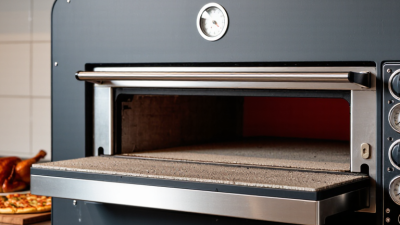
Demand for the fire place oven is expanding as buyers seek warmth, cooking performance, and distinctive outdoor living spaces. Fortune Business Insights estimates steady growth in the global fireplace market, supported by residential renovation and hospitality investment. Grand View Research also identifies outdoor kitchens as a growing construction and lifestyle segment. These reports suggest opportunity, but they do not define every fireplace oven application consistently.
China has become an important manufacturing base for this category. Its suppliers offer refractory chambers, stainless-steel doors, ceramic cooking floors, insulated shells, and private-label packaging. Experienced buyers should examine more than catalog photographs. A reliable factory should provide material specifications, heat-performance records, production photos, and traceable quality procedures. Factory audits can reveal practical details, such as uneven firebrick joints, weak hinges, or damaged export pallets.
Small details matter.
The International Energy Agency continues to highlight the importance of building energy efficiency and cleaner heating choices. Therefore, buyers should verify combustion design, emissions information, installation clearances, and applicable local standards before placing orders. Depending on the destination, testing may involve CE, UKCA, UL, or other recognized requirements. Certification is not automatically transferable between markets.
This guide reviews China’s leading fireplace oven manufacturers for global buyers. It considers manufacturing experience, customization capacity, quality control, documentation, and after-sales support. Rankings remain imperfect because supplier data changes quickly, and public reports rarely capture factory-level performance. That limitation deserves attention. A lower quoted price may hide thicker packaging needs, inconsistent insulation, or costly replacement parts. Careful comparison, sample testing, and direct technical communication can reduce those risks.
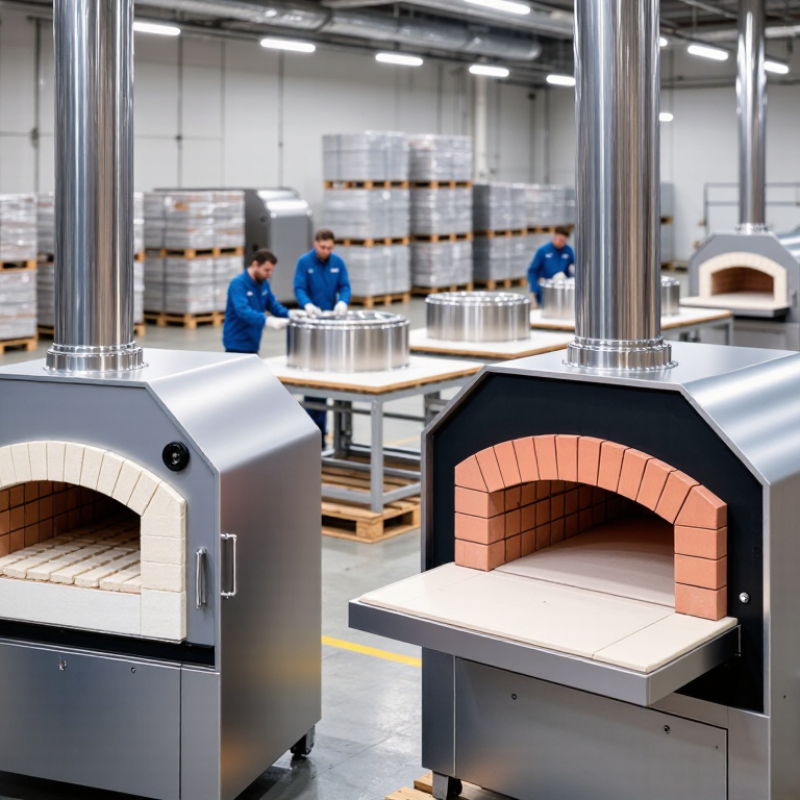
A high-quality Chinese fireplace oven manufacturer proves performance, not merely appearance. The factory should control steel grades, welding procedures, insulation density, door alignment, and glass temperature ratings. Ask for batch-level traceability. Each unit should connect to material certificates, inspection records, and final test results. The ISO Survey 2023 recorded 1,265,216 ISO 9001 certificates worldwide. Certification alone proves little. Its value depends on current audits, corrective actions, and measurable process controls.
For global buyers, compliance must be practical. A capable manufacturer understands rules for emissions, safety, electrical parts, packaging, and labeling. It should provide reports from ISO/IEC 17025-accredited laboratories, not edited screenshots.
European solid-fuel appliance projects may involve EN 16510 requirements. North American projects often require local emissions and safety pathways. The U.S. Environmental Protection Agency’s residential wood-heater standards include particulate limits as low as 2.0 grams per hour for cordwood testing. That detail matters. Ask which fuel and loading method produced the result. A weakness remains possible: factory samples may receive more attention than production batches.
Tips: Request a live video inspection, random sample testing, serial-number photos, and a spare-parts list. Check warranty exclusions. Require manuals with clear clearances and ventilation guidance. Compare three recent shipments, not one impressive prototype.
China Top Fireplace Oven Manufacturers for Global Buyers
Key Manufacturing Regions and Production Capabilities
China’s fireplace oven production is concentrated in several industrial regions. Guangdong supports mature metal fabrication and export logistics, especially around Foshan and surrounding cities. Factories there often handle steel cutting, laser welding, surface finishing, and assembly under one roof. Zhejiang is strong in hardware, cast components, and compact heating appliances. Ningbo’s port network also helps buyers manage container shipments efficiently. Jiangsu and Shandong contribute larger machining capacity, steel processing, and industrial testing resources.
Production capability varies sharply between factories. Some workshops make cast iron doors, heat-resistant glass frames, and welded combustion chambers in-house. Others outsource castings or coating work, which can affect lead times and consistency. Reliable suppliers should provide material certificates, dimensional reports, batch records, and combustion test data. Buyers should inspect weld penetration, door alignment, gasket compression, and surface coating thickness. These details matter during repeated heating cycles.
Customization is common. Manufacturers may adjust dimensions, flue positions, handles, packaging, and installation guides. However, customization can slow sampling and increase tooling costs. A low quoted price may exclude testing or export-grade packaging. That deserves careful questioning. Factory visits remain useful, but they are not perfect evidence. Production may change after approval. Independent inspections and sample retesting offer stronger control, especially for large orders and different heating standards.
This regional benchmark compares the presence of four relevant manufacturing capabilities: metal fabrication, heating-appliance production, outdoor cooking equipment, and export logistics. The capability count reflects established industrial strengths in each region rather than company-specific output or brand performance. No company or brand data is included.
Chinese fireplace oven makers increasingly serve global buyers through technical customization, export documentation, and structured quality control.
The IEA’s Energy Efficiency 2023 report states that buildings use about 30% of global energy. This increases demand for appliances with controlled combustion, heat retention, and measurable efficiency. Experienced manufacturers therefore discuss fuel type, room size, ventilation, and local safety requirements before quoting.
Factory audits often examine steel thickness, weld penetration, door seals, refractory lining, and temperature testing.
Buyers should request material certificates, inspection records, installation drawings, and user manuals in the destination language. A practical supplier may also provide trial samples, reinforced corner protection, moisture-resistant packaging, and spare gaskets.
Small details matter. A damaged glass panel can delay an entire installation.
UNCTAD’s Review of Maritime Transport reports that more than 80% of world merchandise trade moves by sea. Chinese producers commonly adapt crate dimensions, container loading plans, and delivery terms for overseas projects.
However, quotations are not always comparable. Some exclude testing, inland transport, or replacement parts. That weakness deserves attention.
Buyers can reduce risk through pre-shipment inspections, video checks, and written acceptance criteria. After-sales support remains uneven, especially when installation advice crosses language and climate differences. Reliable cooperation requires clear records, responsive engineers, and realistic production schedules rather than attractive promises alone.
China’s top fireplace oven manufacturers serve buyers across hospitality, residential, and outdoor cooking markets.
Quality begins with controlled materials, not attractive brochures. Stainless steel grades, insulation density, door seals, and thermal expansion should appear in technical records.
ISO’s 2023 survey reported more than one million ISO 9001 certificates worldwide, showing the value of documented quality systems. Yet certification alone proves little without batch testing and corrective-action records.
Export compliance depends on the destination.
European buyers may require CE documentation, applicable EN standards, and emissions evidence for solid-fuel appliances. Other markets can request electrical safety reports, food-contact declarations, labeling rules, or local energy tests.
The World Bank’s 2023 Logistics Performance Index evaluated 139 economies and highlighted customs clearance, tracking, and delivery reliability.
These factors matter when ovens arrive with missing manuals or incorrect tariff descriptions. A certificate is not a complete compliance strategy.
Tips:
Request a recent factory audit, material certificates, serial-number photos, and a full Declaration of Conformity. Confirm whether testing covers the exact model, fuel type, and accessories. Ask for packaging-drop test results.
Small omissions become expensive delays. Manufacturers should also provide multilingual installation instructions, pallet dimensions, HS-code support, and pre-shipment inspection records.
I would still verify every document with an independent laboratory or customs adviser; paperwork can look convincing and remain incomplete.
Choosing a China-based fireplace oven supplier requires more than comparing catalog prices. In supplier reviews, I examine factory records, production capacity, and export experience. A polished website proves very little. Request recent factory photographs, material specifications, and independent test reports. Where possible, arrange a video inspection or an in-person audit.
Product evaluation should focus on daily use. Check the oven’s steel grade, insulation thickness, door seal, hinges, temperature range, and ventilation design. Ask how heat distribution is tested across the cooking chamber. Request drawings with exact dimensions. Small differences matter during installation. I also inspect packaging samples, because damaged doors and cracked panels create expensive delays. My early mistake was trusting attractive samples without checking replacement-part availability.
Purchase terms need equal attention. Confirm the minimum order quantity, production lead time, payment stages, and agreed inspection point. Define acceptable tolerances in writing. Clarify whether pricing includes export packaging, documentation, and loading costs. Incoterms should match your logistics experience and risk tolerance. A clear warranty should cover manufacturing defects, while spare parts should remain available for a stated period. Ask for a corrective-action process when inspections fail. Cheap terms can become costly later. Keep communication records, even when the supplier seems highly responsive.