What Is a Plaza Musical Fountain?
A plaza musical fountain is more than water rising to music. It is a coordinated public installation combining hydraulic engineering, lighting, sound, automation, and architectural design. In a busy square, pumps push water through carefully sized nozzles. LED fixtures color each stream. Speakers shape the atmosphere. Control software synchronizes every movement with rhythm and timing.
Mark Fuller, founder of WET Design, has described water as “a powerful medium.” That simple observation explains the appeal of Plaza Musical Fountains. Water can suggest movement, celebration, calm, or even cultural identity. A narrow jet may pulse like a drumbeat. A fan-shaped spray can spread across a shallow basin. At night, blue and amber light can make the same structure feel completely different.
Still, the visual effect is only one part of the design. A reliable fountain needs balanced flow, accessible maintenance areas, effective filtration, safe electrical systems, and controlled splash zones. It must also consider wind, evaporation, noise, drainage, and seasonal use. A beautiful sequence can fail when nozzles clog or music becomes too loud. That is an uncomfortable reality.
This guide examines what a plaza musical fountain is, how its systems work, and why planning matters. It also considers visitor experience, operating costs, and long-term maintenance. The technology is impressive, but it is not magic. Good results depend on details that visitors may never notice.
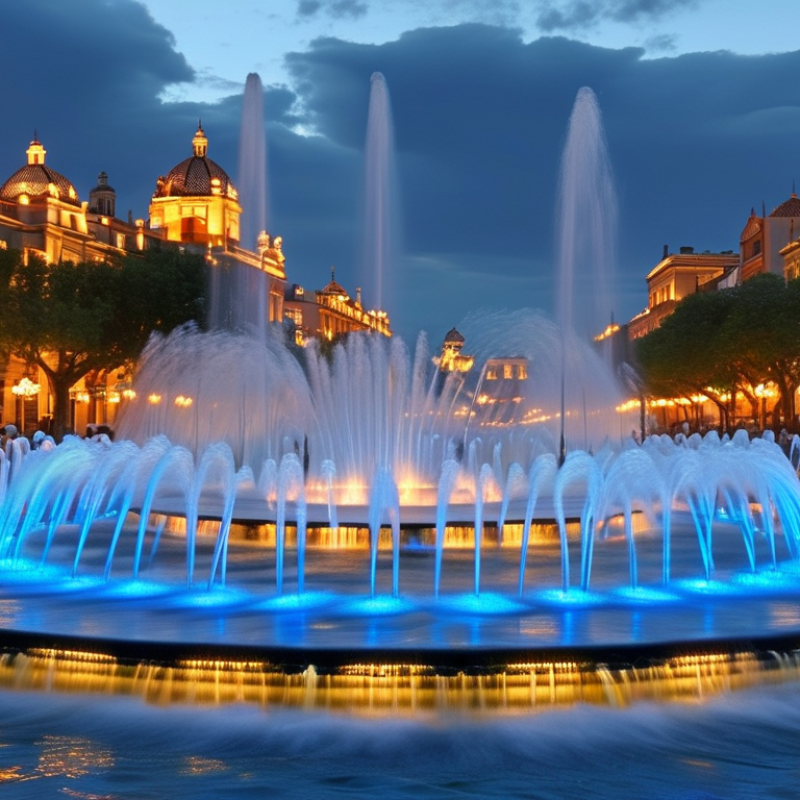
Table of Contents [Hide]
Definition and Core Features of a Plaza Musical Fountain
What Is a Plaza Musical Fountain?
A plaza musical fountain is a public water installation that combines programmed jets, lighting, and music. It turns an open civic space into a timed sensory experience. Unlike a simple decorative pool, its nozzles respond to rhythm, musical cues, or preset sequences. The core system includes pumps, valves, controllers, speakers, lighting, drainage, and water-treatment equipment.
Its strongest feature is coordination. Jets may rise, pause, or cross in patterns that follow a musical arrangement. Reliable designs also manage splash, slip risks, water quality, and maintenance access. During site inspections, professionals often notice small details, such as hidden drains and service panels. These features affect safety and long-term operating costs. The fountain should also fit the plaza’s scale, pedestrian flow, climate, and daily noise levels. Still, perfect synchronization is not guaranteed. Wind, blocked nozzles, or aging equipment can change the performance.
Tips: Watch one complete show cycle before judging the design. Check whether visitors can walk safely around wet areas. Ask how often filters, pumps, and lights require inspection. A quieter schedule may serve nearby residents better than constant music. That choice deserves careful review.
What Is a Plaza Musical Fountain? - Definition and Core Features of a Plaza Musical Fountain
| Data Dimension | Typical Data or Specification | Description |
|---|---|---|
| Definition | Interactive architectural water feature | A plaza musical fountain combines programmed water movement, lighting, and synchronized music to create a public-space performance or interactive attraction. |
| Primary Purpose | Public entertainment and placemaking | The fountain improves visual interest, encourages visitors to gather, and can serve as a landmark within a civic, commercial, residential, or recreational plaza. |
| Common Installation Area | Approximately 50–2,000 m² | The required area depends on the number of water effects, visitor circulation, technical rooms, drainage zones, and surrounding landscape design. |
| Water Display Type | Vertical jets, arcs, sheets, sprays, and cascades | Multiple water effects are combined to produce changing shapes, heights, rhythms, and movement patterns during a programmed performance. |
| Jet Height | Approximately 0.3–15 m for many plaza installations | Jet height is selected according to the plaza scale, wind exposure, viewing distance, safety requirements, and the desired visual effect. |
| Nozzle System | Fixed, adjustable, fan, foaming, laminar, or mist nozzles | Nozzles shape the water and determine the appearance, spray direction, flow pattern, and performance variety of the fountain. |
| Pump and Flow Control | Variable-speed pumps with individually controlled circuits | Independent control of pump speed and water circuits allows the system to match jet height and flow changes to musical timing. |
| Lighting System | Submersible LED lighting, commonly RGB or RGBW | Underwater lighting highlights jets and water surfaces. Color-changing fixtures can be programmed to fade, pulse, or change color with the music. |
| Music and Audio | Outdoor loudspeakers with scheduled audio playback | Music provides the timing reference for water and lighting cues. Audio equipment normally requires weather protection and appropriate sound distribution. |
| Control Method | Programmable controller, touchscreen, or remote monitoring system | The control system stores show sequences, schedules operating hours, adjusts individual devices, and records alarms or equipment status. |
| Synchronization Accuracy | Typically controlled by time-coded sequences | Time-coded programming coordinates pumps, valves, lights, and audio so that changes occur at predetermined points in the musical track. |
| Water Circulation | Recirculating closed-loop system | Most plaza fountains collect water in a basin or underground reservoir, filter it, treat it, and reuse it rather than continuously consuming fresh water. |
| Water Treatment | Filtration, disinfection, and water-quality monitoring | Treatment helps control suspended particles, biological growth, odors, and scale. The exact treatment method depends on local regulations and whether public contact is permitted. |
| Interactive Operation | Optional sensor-based or user-activated control | Sensors, push buttons, or programmed zones can allow the fountain to respond to movement, touch, time of day, or visitor activity. |
| Safety Features | Drainage, anti-slip surfaces, electrical protection, and emergency shutoff | Design should address slip hazards, electrical isolation, safe water depth, overflow control, access to equipment, and rapid shutdown during faults or maintenance. |
| Accessibility | Flush or low-profile plaza integration | Many interactive fountains are designed without raised edges so that pedestrians, wheelchair users, and maintenance staff can move around the space more easily. |
| Typical Operating Modes | Show mode, ambient mode, interactive mode, and maintenance mode | Different modes support scheduled musical performances, quiet background operation, public interaction, cleaning, inspection, and emergency servicing. |
| Energy Considerations | Pump power varies with flow, pressure, jet height, and operating schedule | Variable-speed drives, efficient LED fixtures, timed operation, and well-designed hydraulic circuits can reduce energy consumption. |
| Maintenance Requirements | Routine inspection, cleaning, water testing, and equipment servicing | Regular maintenance protects pumps, filters, valves, lights, nozzles, drainage components, and control equipment while preserving water quality and show performance. |
| Common Applications | Civic plazas, shopping areas, hotels, parks, resorts, and mixed-use developments | Plaza musical fountains are used where a visually prominent, programmable public feature is intended to support social activity and visitor engagement. |