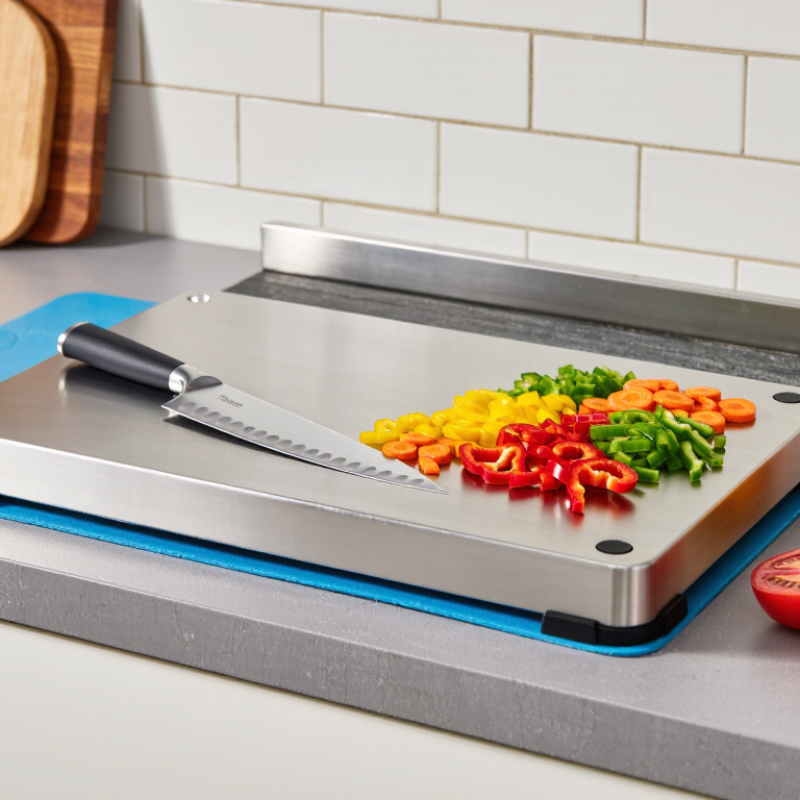
Stainless steel is usually the strongest all-round choice for a metal cutting board.
The FDA Food Code 2022 requires food-contact surfaces to be smooth, corrosion-resistant, nonabsorbent, and easy to clean. These requirements favor high-quality 304 stainless steel for ordinary kitchens. It resists odors, moisture, and staining. It also tolerates frequent washing. However, stainless steel is hard. It can dull knife edges faster than wood or plastic. That cost is often overlooked.
Aluminum is lighter and softer.
The International Aluminium Institute reports that recycled aluminum uses about 5% of the energy required for primary production. That gives aluminum a sustainability advantage when recycled content is verified. Yet, its surface scratches more easily. Acidic foods, including tomatoes and citrus, may also cause discoloration or metallic flavor. I would choose thick, anodized aluminum only when low weight matters. Thin sheets can flex while chopping. That feels unsafe.
Copper offers excellent thermal conductivity and natural antimicrobial activity, but it needs more care.
The FDA Food Code 2022 limits copper contact with acidic foods, because chemical reactions may occur. Copper is better for specialty preparation than daily chopping. NSF/ANSI 2-2022 also emphasizes cleanable, durable food equipment surfaces, not decorative finishes. My practical preference is brushed stainless steel with rounded edges and a stable base. Even then, it is not perfect. A metal board should be cleaned immediately, dried fully, and paired with knives that can be sharpened regularly.