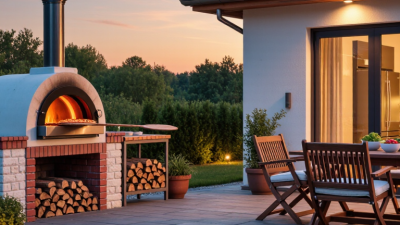
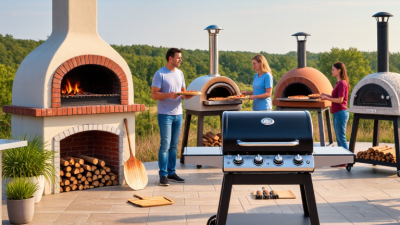
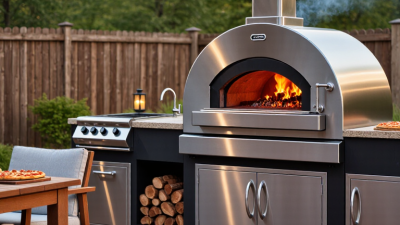
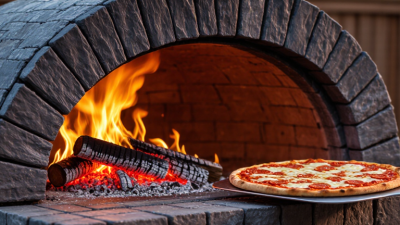
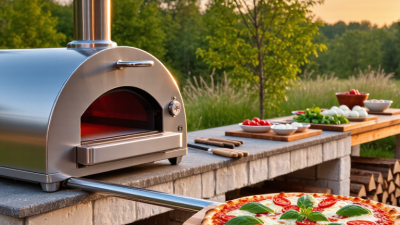
Choosing the best outdoor fireplace for cooking pizza in China requires more than attractive design. Heat performance matters most. A beautiful fireplace may still produce a pale crust, uneven toppings, or excessive smoke.
Chris Bianco, the James Beard Award-winning pizzaiolo, has said, “The most important ingredient in pizza is time.” His point applies strongly to outdoor cooking. A reliable fireplace needs enough thermal mass to absorb heat gradually. It should also maintain a stable baking temperature near the cooking floor. A built-in thermometer helps, but surface temperature matters too. An infrared thermometer can reveal cold spots before the pizza enters.
For Chinese homeowners, restaurants, and outdoor kitchen designers, material selection deserves careful attention. Food-safe cooking surfaces, heat-resistant insulation, and durable weather protection support safer, longer use. A wide opening helps with pizza placement. Proper airflow helps the fire burn cleanly. However, bigger is not always better. A large chamber may require more fuel and longer preheating.
Wood-fired flavor is appealing. Still, smoke control and responsible fuel storage cannot be ignored. Dry hardwood usually burns more consistently than damp wood. The wrong fuel can create bitter aromas and unstable heat. No fireplace is perfect. I still question products that promise restaurant-quality pizza without explaining insulation, maintenance, or testing conditions.
This guide compares practical fireplace features, construction quality, temperature control, and cooking results. It also considers Chinese manufacturing advantages, customization options, and after-sales support. The goal is not to promote one product blindly. It is to identify a dependable fireplace that turns outdoor pizza making into a repeatable experience.
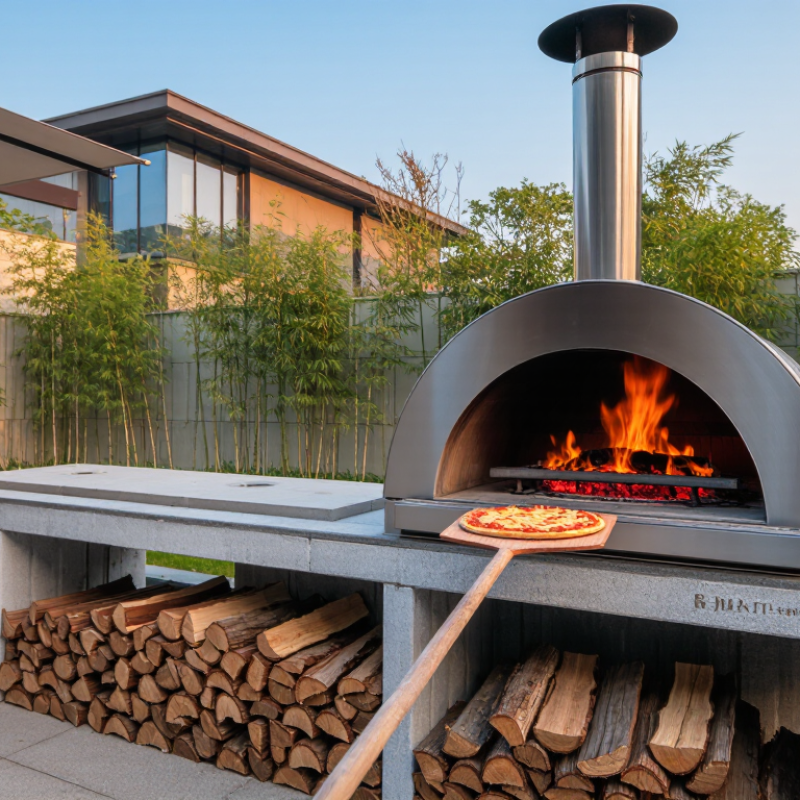
What makes China’s outdoor fireplaces suitable for cooking pizza? The answer is usually heat control, not country of origin. Chinese manufacturers can produce compact steel shells, refractory interiors, insulated doors, and adjustable air vents at different price levels. A suitable unit should hold at least 400–500°C near the cooking surface. That temperature helps create a crisp base and browned toppings within a few minutes. Refractory bricks store heat, while ceramic-fiber insulation reduces heat loss through the outer wall.
Design details matter more than appearance. A wide mouth makes launching pizza easier, but it can also waste heat. A smaller opening usually improves temperature retention. The chimney should draw smoke steadily without pulling flames away from the cooking floor. Stainless steel helps resist rain and grease, although thin steel may deform after repeated heating. I would check wall thickness, weld quality, brick joints, and door fit before trusting a product description. Some specifications look impressive, yet the cooking floor cools quickly after one pizza.
Safety deserves equal attention. The National Fire Protection Association reported about 11,800 home fires involving outdoor cooking equipment annually from 2017 to 2021. Those fires caused approximately 230 civilian injuries and 284 million dollars in property damage. A reliable fireplace needs stable legs, heat-resistant handles, controlled airflow, and clear installation instructions. It should also be tested against relevant standards, such as ASTM F3363 for outdoor wood-fired pizza ovens, where applicable. China offers many capable designs, but “best” still depends on testing, materials, ventilation, and real cooking performance.
Material choice controls heat stability. The U.S. Environmental Protection Agency’s Burn Wise guidance recommends firewood moisture below 20 percent. Wetter wood produces smoke, weaker flames, and unstable baking temperatures. Refractory firebrick suits the cooking floor because it stores heat and tolerates repeated thermal shock. Ordinary concrete can crack badly. I learned this after seeing hairline fractures spread around a poorly insulated hearth.
The dome should use refractory mortar, not standard masonry cement. A compact dome reflects heat toward the pizza, while a narrow opening limits heat loss. Ceramic-fiber or mineral insulation above the dome helps preserve heat during back-to-back baking. The cooking surface also needs a smooth transition, because rough joints collect flour and create burnt patches. Small details matter.
The Associazione Verace Pizza Napoletana specifies roughly 430–480°C and baking times near 60–90 seconds for traditional pizza. A built-in thermometer helps, but it does not measure the hearth floor accurately. An infrared thermometer is more dependable. I would check several points before baking. One reading can mislead. A chimney with stable draft reduces smoke, yet an oversized flue may pull heat away too quickly. Local installation rules and NFPA 211 guidance should be reviewed before construction, especially for clearances and spark protection.
How to Choose the Right Chinese Outdoor Pizza Fireplace
Choosing a Chinese outdoor pizza fireplace requires more than comparing prices. Start with the cooking chamber. A compact chamber heats faster, while a wider one handles multiple pizzas and larger pans. Measure your patio first. A beautiful oven becomes frustrating when its door blocks a walkway.
Pay close attention to insulation, stone thickness, and heat retention. Good insulation keeps the outer shell safer to touch and reduces fuel waste. The baking surface should heat evenly, without obvious cold corners. Ask the supplier for material details, temperature tests, and cleaning instructions. Reliable documentation matters more than polished photographs.
Check the fuel system and ventilation carefully. Wood-fired models create stronger flavor, but they need dry storage and a suitable chimney. Gas models offer faster control, though their burners require proper maintenance. Follow local fire and building rules before installation. I once assumed a heavier fireplace would always perform better. That was not entirely true. Poor airflow can weaken even a solid-looking design.
Look for sturdy wheels, stable legs, weather-resistant finishes, and replaceable parts. Try to confirm the actual assembled weight, not only the package weight. Read recent buyer feedback for delivery damage and assembly problems. A small temperature gauge helps, but an infrared thermometer gives more useful information. Leave room for error. Your first pizza may burn underneath while the top remains pale. That reveals a heating imbalance, not necessarily a bad oven.
China Best Outdoor Fireplace for Cooking Pizza?
Outdoor fireplaces can cook pizza, but they are not automatically pizza ovens. Their heat is uneven, and smoke can affect the crust. I learned this after burning my first pizza’s rim while the center remained soft. A repeatable method matters more than appearance.
Clear old ash, inspect the chimney, and remove nearby dry materials. NFPA’s Home Grill Fires report recorded an average of about 11,400 home grill fires annually from 2017 to 2021. Use dry hardwood only, and keep a metal tool and water source nearby. Build the fire for 45–60 minutes. Then move glowing embers toward the back and sides. Place a baking stone or steel on a stable, heat-resistant surface. An infrared thermometer helps. Aim for 370–430°C on the cooking surface, rather than guessing from the flame color.
Stretch a thin dough base, add a light layer of sauce, and avoid excessive toppings. Slide the pizza onto the heated surface. Rotate it every 30–45 seconds for even browning. Most fireplaces need two to five minutes per pizza. Watch the underside closely. It can burn first. For meat toppings, follow USDA FSIS guidance: poultry should reach 74°C internally, while ground meats need 71°C. Leave the door or opening positioned according to the fireplace’s instructions. Never block ventilation. The result may be less uniform than a dedicated pizza oven, but careful fire control improves each attempt.
China Best Outdoor Fireplace for Cooking Pizza?
A reliable outdoor fireplace should manage heat, smoke, and food safely. When choosing a China-made model, inspect the firebox, chimney joints, door seal, and cooking surface. Stainless steel should resist corrosion, but it still needs cleaning. NFPA’s 2017–2021 analysis recorded about 11,800 home grill fires annually in the United States. That figure makes placement and supervision more than minor details.
Set the fireplace on a stable, non-combustible surface, away from walls, fences, dry leaves, and overhead branches. Follow the manufacturer’s clearance instructions, even when the unit looks small. Use dry, approved fuel only. Never add fuel while flames are high. A long-handled peel keeps hands away from the pizza stone and radiant heat. Keep children and pets outside the working zone. Keep it boring.
After cooking, close the screen only if the design allows safe airflow. Ash holds heat. I would wait until the fire is completely cold before removing it, preferably the next day. Store cooled ash in a metal container with a tight lid, not in plastic. Check the chimney for soot, nests, loose joints, and water damage before each season. NFPA 211 guidance supports regular inspection of fireplaces, chimneys, and vents, while local rules may require professional service.
Pizza grease can harden on the stone and attract pests. Scrape residue gently after cooling, but avoid soaking porous stones. Inspect cracks before every use. A damaged stone may fail under thermal shock. I once underestimated wind; the flame changed direction within seconds. That mistake deserves repeating less often. Record cleaning dates and repairs, because memory is unreliable.